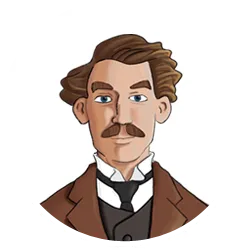
Alexander McCallum, known as ‘Alex’ McCallum, was born in Lochgilphead, Argyllshire, Scotland, in 1886, the son of Alexander and Christina McCallum (née McLarty). His father was a mason and Alex was the second-youngest of eight known children in the family. His father died in 1907, and in 1915, the family home was at Coronation Mansions, Lochgilphead.
In October 1908, he boarded the Anchor Liner Caledonia at Glasgow, to travel to the United States of America, and arrived there on the 12th of that month. He then travelled to San Francisco, California, where his brother, Donald, was living, and he found work there as a clerk and bookkeeper.
In the spring of 1915, he decided to return home to enlist in the British Army, being mindful of his patriotic duty. As a result, he booked a third class passage on the May sailing of the Lusitania from New York to Liverpool.
From documents found in the Cunard archives held at the University of Liverpool, Alex was travelling with four other young men, all of whom intended to enlist. One of these was reputed to be Thomas Dhenin, who was also being accompanied by his family. Arthur Shepperson, William Muirhead, and Herbert K. Johnson were others.
He arrived at the Cunard berth at Pier 54 on the west side of the city on the morning of 1st May 1915 in time for the liner’s scheduled 10.00 a.m. sailing, but having boarded, with ticket number 1805, he had to wait until the early afternoon before the liner began what was to be her last voyage. This was because she had to take on board passengers, cargo and crew from the Anchor Liner Cameronia, which had been requisitioned by the British Admiralty for war work as a troop ship.
Then, six days later, on the afternoon of 7th May, the Lusitania was torpedoed twelve miles off the coast of southern Ireland by the German submarine U-20, and sank just
eighteen minutes later. At that stage of her voyage, she was only 250 miles from the safety of her home port.
Unfortunately, Alex McCallum lost his life as a result of this action and as his body was never recovered and identified afterwards, he has no known grave. He was aged 27 at the time of his death. All the others survived with the exception of Thomas Dhenin’s wife and children.
In the hope that his body might have been one of those recovered but not identified, his family later sent the following description of him to Cunard: -
Tall, well made, dark brown hair, clean shaven, good teeth, gold filling between two front upper teeth, one molar upper right side out, dark blue serge suit, 16½ collar, tie and stick pin in the form of two wings (silver). Probably Olympic Club Emblem, Coat pocket, certificate of health comprising full identity, also photograph of girl friend residing in Glasgow.
Despite this full account, no-one amongst the recovered dead matched the description.
Cunard records at the time stated his forename to be Albert, but this was clearly an error.
1891 Census of Scotland, 1901 Census of Scotland, 1910 U.S. Federal Census, New York Passenger Lists 1820 – 1957, Cunard Records, PRO BT 100/345, UniLiv.D92/1/5, UniLiv D92/2/50, Deaths at Sea 1871 – 1968, Graham Maddocks, Geoff Whitfield, Michael Poirier, Jim Kalafus, Cliff Barry, Paul Latimer, Norman Gray.
Copyright © Peter Kelly.